Yard Waste Removal in Dallas, TX
Brush piles, storm debris, and bagged leaves hauled away and composted or mulched. No bundling required.
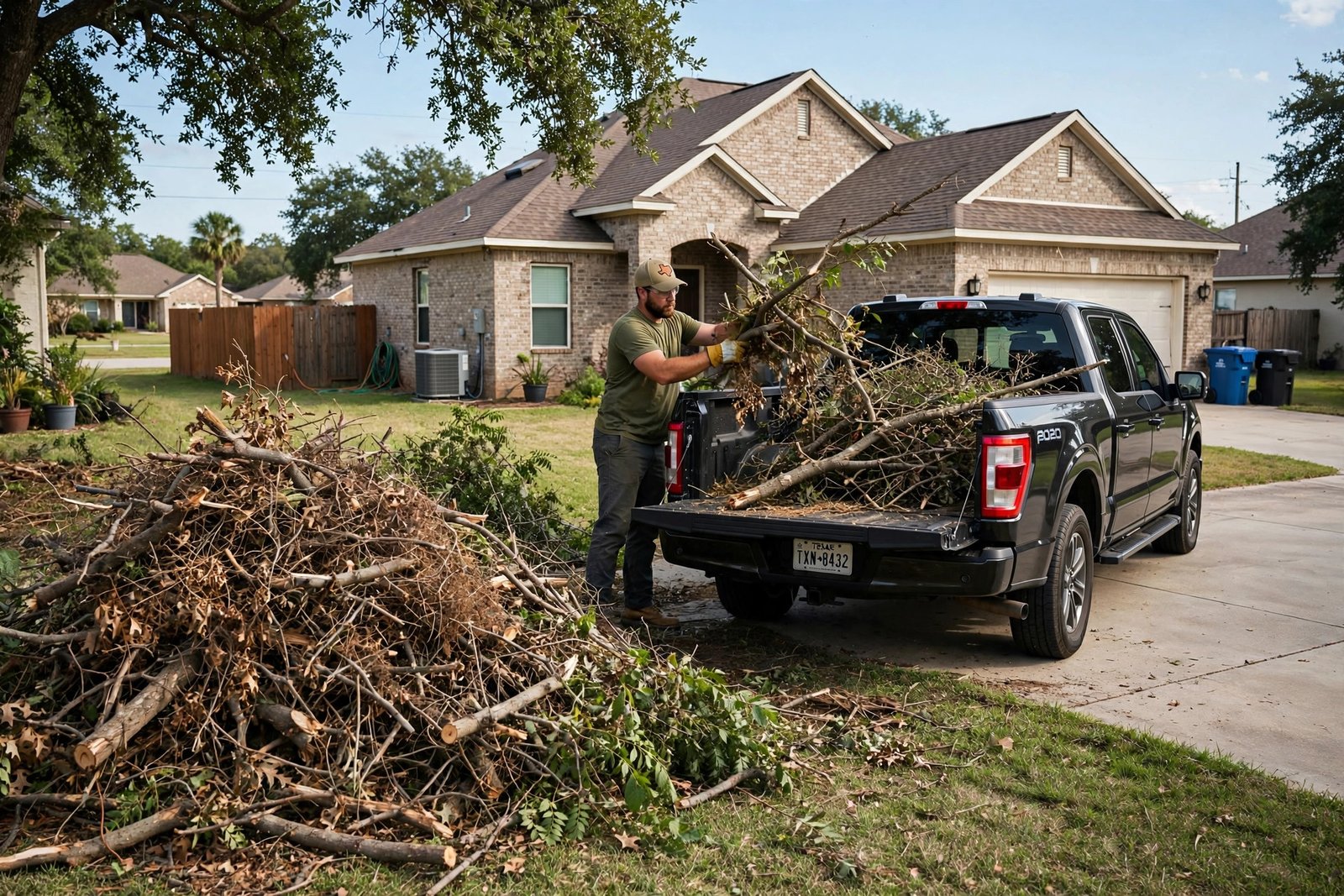
The Pile Problem
Every Dallas yard eventually produces a pile that the city will not touch as-is: the mountain of limbs from trimming the live oak, the bags of leaves from fall, the fence the wind took down in April. Dallas sanitation runs on rules and schedules, and your pile rarely fits either. So it sits, growing, killing the grass underneath, and drawing the HOA letter.
The Yard Waste We Remove
From routine trimmings to post-storm wreckage:
- Branches, limbs, and brush piles, loose or bundled
- Leaves and grass clippings, bagged or loose
- Shrubs, bushes, and hedge trimmings
- Storm debris: fallen limbs, scattered branches, windblown junk
- Old fences, broken planters, and worn-out patio furniture
- Sod, mulch, and soil from bed renovations
- Dirt, gravel, bricks, and concrete chunks (heavy-material loads)
- Fallen sheds, damaged arbors, and small collapsed structures
Storm Debris Cleanup in Dallas
Dallas storm season is real: spring hail, summer microbursts, and the occasional tornado watch that turns into something worse. After a storm, the yard looks like a lumber yard exploded, and the clock is ticking on insurance documentation and HOA patience.
Our storm cleanup covers fallen limbs and branches, scattered debris, damaged fences, and ruined outdoor furniture. Before we clear anything, photograph the damage for your insurance claim; adjusters want to see the mess before it is gone. Then call us and we will get the yard back to normal fast, with the organic debris routed to mulching and the damaged structures hauled as construction debris.
How It Works
- Show us the pile. Photos or a quick walkthrough get you a firm, free quote.
- We load it. The crew hand-loads brush, bags, and debris. You do not lift a thing.
- We sweep and sort. The area gets raked clean, and organic material is separated for composting and mulching streams.
Most residential yard jobs are done in a single visit, often within the hour.
Yard waste is one of the easiest materials to keep out of the landfill, so we do. Brush and limbs go to mulching operations where they are chipped into usable mulch. Leaves, grass, and soft organics head to composting streams. Clean wood from fences and structures is separated for recycling where possible.
Heavy materials like dirt, concrete, and brick go to construction recycling facilities that crush them into aggregate for new building projects. Only the true leftovers, mixed and unrecoverable debris, see the inside of a landfill.
How it works
Show us the pile
Photos or a quick walkthrough get you a firm, free quote.
We load it
The crew hand-loads brush, bags, and debris. You do not lift a thing.
We sweep and sort
The area gets raked clean, and organic material is separated for composting and mulching streams.
Get a quote based on the actual items, access and timing.
Request a free quoteKnow what belongs in the job.
Dallas Yard-Waste Rules: The City vs. Us
The City of Dallas does offer yard-waste options, and they are worth knowing:
| Option | How it works |
|---|---|
| Monthly brush and bulky collection | The city collects brush and bulky items monthly. Material must meet set-out rules on size and placement, and it has to be at the curb on the right week. |
| Cost Plus on-demand collection | For brush and bulky items outside the normal week, including yard debris, concrete, rocks, large metal, and dirt, the city offers on-demand Cost Plus collection. You request it and pay the added fee. |
| Our pickup | We come any day, take the pile as it lies with no bundling or set-out rules, load everything ourselves, and clean up. Best when the pile is big, the HOA is watching, or you want it gone this week. |
Where It Goes: Composting and Mulching
Yard waste is one of the easiest materials to keep out of the landfill, so we do. Brush and limbs go to mulching operations where they are chipped into usable mulch. Leaves, grass, and soft organics head to composting streams. Clean wood from fences and structures is separated for recycling where possible.
Heavy materials like dirt, concrete, and brick go to construction recycling facilities that crush them into aggregate for new building projects. Only the true leftovers, mixed and unrecoverable debris, see the inside of a landfill.
A clear path for homes, properties and projects.
For Landlords and HOAs
Yard waste is one of the most common sources of HOA violation letters in Dallas: the overgrown side yard, the brush pile visible from the street, the tenant who never quite got around to it. We clear violation-triggering debris fast, with before-and-after photos you can send straight to the HOA board or property owner.
Landlords dealing with tenant-abandoned yards get the same treatment: full clearance of brush, debris, and junk, the lawn left clean and ready for the next tenant. One call resolves the letter, the fine risk, and the eyesore in a single visit.
Dallas access changes from block to block.
Serving Dallas and nearby communities including Lakewood, Preston Hollow, North Dallas, Oak Cliff, and East Dallas.